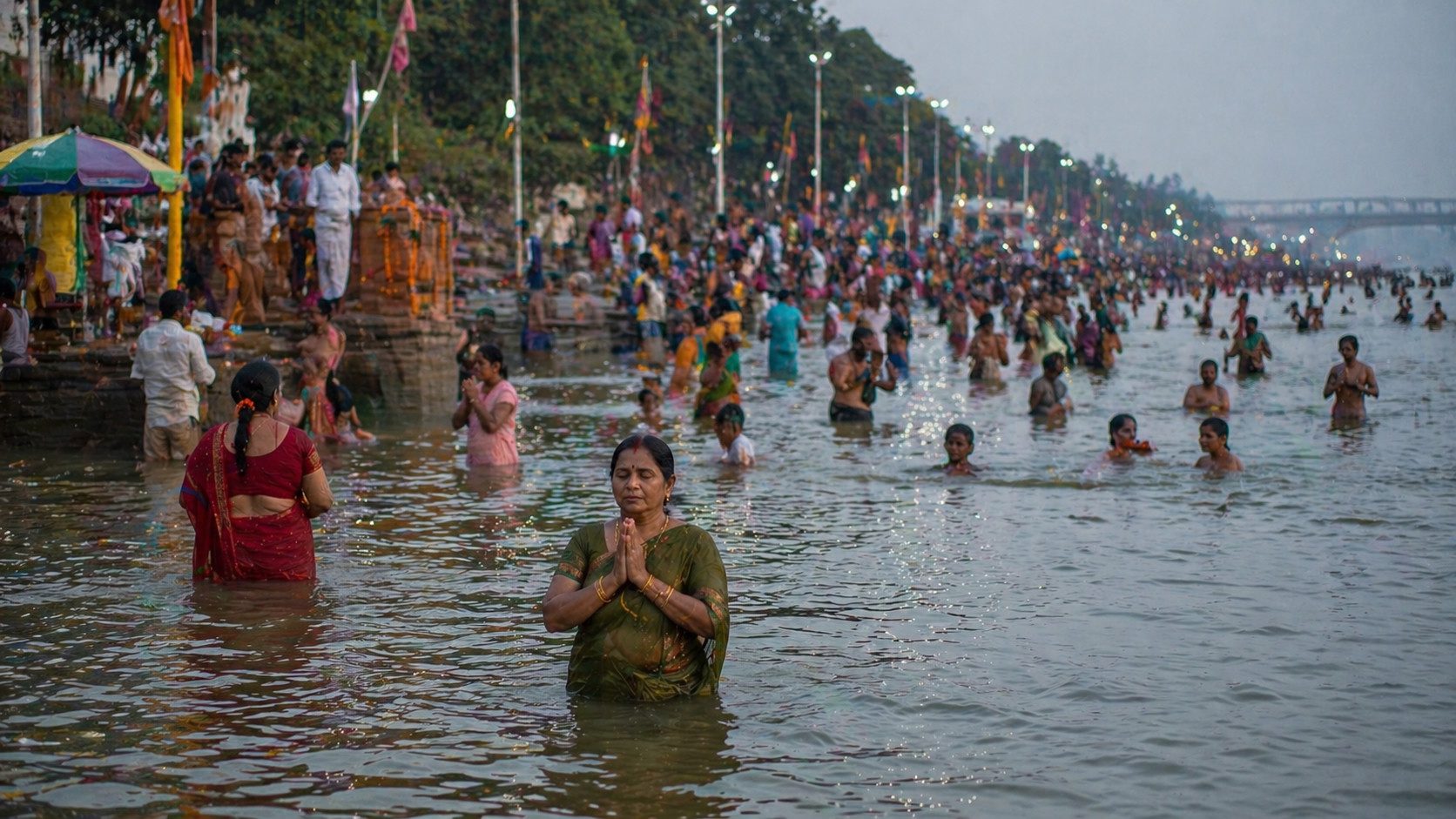
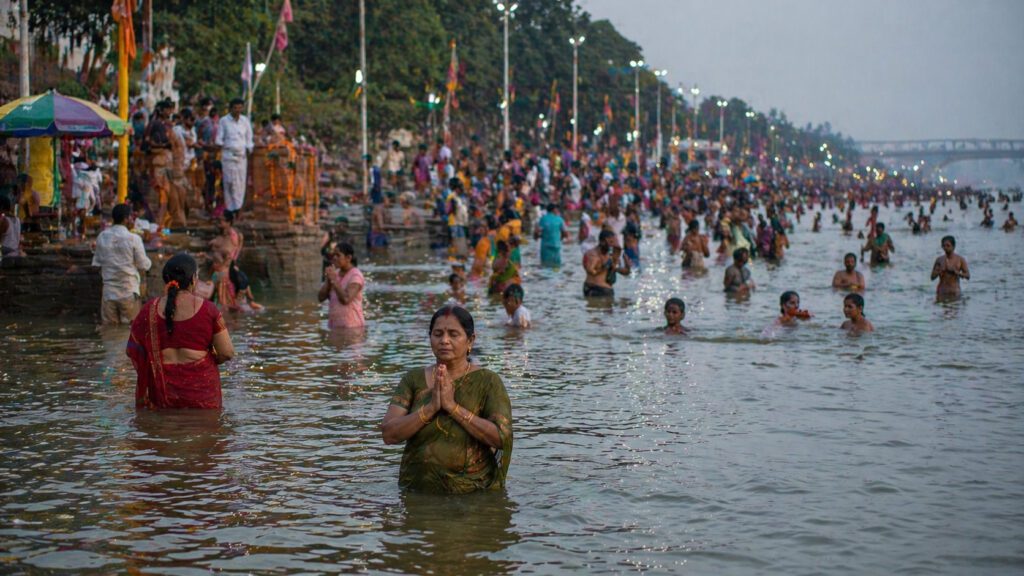
Sankalpam is the formal declaration of intent that precedes every Hindu ritual. Before taking the Pushkar Snanam at Godavari Pushkaralu 2027, every pilgrim must perform Sankalpam to officially state who they are, where they are, when the ritual is taking place, and what they wish to achieve through the snanam. Without proper Sankalpam, the snanam is considered as just a bath, not a ritual.
Components of a Complete Sankalpam
- Tithi — the Hindu lunar day (eg. Ashada Krishna Saptami)
- Vara — day of the week (eg. Vyazhakizhamai = Thursday)
- Nakshatra — current star (eg. Hasta nakshatra)
- Yoga and Karana — astronomical conjunctions
- Maasa — Hindu month (Ashada/Sravana for Pushkaralu 2027)
- Samvatsara — Hindu year (Plava nama samvatsara)
- Ayanam — Dakshinayana (since Pushkaralu falls in this period)
- Ritu — Varsha (rainy season)
- Gotra — your family lineage (eg. Bharadwaja, Vasishta)
- Naama — your name with father’s name
- Sthana — location (eg. Rajamahendravaram, Godavari Pushkar Ghat)
- Phalam — purpose (eg. sarva papa kshaya, putra labha, kushala labha)
Sample Sankalpam Mantra
“Om Mamopaatta samasta duritakshaya dwaara Sri Parameshwara prityartham, Adhya Brahmana dwiteeya parardhe Sweta varaha kalpe Vaivasvata manvantare Kaliyuge prathama paade Jambu dweepe Bharata varshe Bharata khande, Godavari teere, Pushkar tirtha sannidhau, Plava nama samvatsare, Dakshinayane, Varsha rituvu, Sravana mase, Krishna pakshe, Ashtami tithau, Soumya vaasare, Hasta nakshatre, [your gotra] gotrasya, [your name] sharmanaha (or namnaha for women), Pushkar snanam aham karishye”
The full Sankalpam takes 3-5 minutes when recited slowly. Priests at the ghats will guide pilgrims through the recitation. After Sankalpam, drop the water from your right palm into the river, signifying the formal commencement of the snanam.
For the actual snanam steps see Snanam Procedure Guide. For all rituals see Pushkaralu Rituals.