
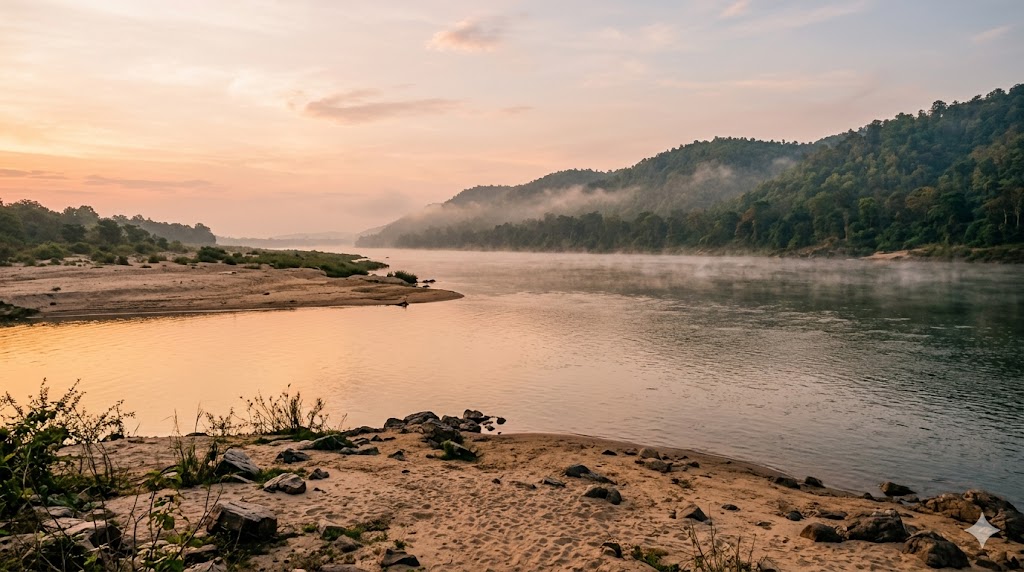
Sironcha Pushkaram 2027 takes place from 26 June to 7 July 2027, when devotees gather where the Pranahita meets the Godavari. You came here for the dates, the sangam details, and a workable travel plan. All of that is below, verified against official announcements. Here is the detail most guides miss: this quiet Maharashtra town sits barely 8 km from Kaleshwaram, so one trip covers two sacred dips.
Quick Facts
- Dates: 26 June to 7 July 2027 (12 days), per the Andhra Pradesh government order GO Rt No 1575
- Location: Sironcha town, Gadchiroli district, Maharashtra — on the Pranahita, near its confluence with the Godavari
- Why it matters: the Pranahita is the largest tributary of the Godavari, so the sangam dip carries double merit in tradition
- Nearest big venue: Kaleshwaram (Telangana), about 8 km away across the Godavari bridge
- Cycle: the festival returns only once every 12 years, when Jupiter enters Simha (Leo)
Sironcha Pushkaram 2027 Dates and Official Announcement
The Godavari Pushkaram begins on 26 June 2027 and concludes on 7 July 2027. The Andhra Pradesh Endowments Department fixed these dates through GO Rt No 1575 in December 2025. The calculations came from the Asthana Siddhanti of Tirumala Tirupati Devasthanams (TTD), so the dates carry full traditional authority.
One correction matters here. In early 2025, several reports quoted 23 July to 3 August as the festival window. The government later superseded that schedule, yet many pages online still show the old dates. Trust only the June 26 to July 7 window when you plan Sironcha Pushkaram 2027.
The festival follows Jupiter, not the calendar alone. When the planet enters Simha rashi, the Godavari becomes the host river for 12 sacred days. Tradition holds that all holy waters reside in the river during this period.
Why the Pranahita Sangam at Sironcha Is Special
The Pranahita is the largest tributary of the Godavari, formed where the Wardha and Wainganga rivers merge. It flows along the Maharashtra–Telangana border before emptying into the Godavari near Sironcha and Kaleshwaram. In Pushkaram tradition, a dip at a sangam, the meeting point of rivers, carries greater merit than a dip along a plain stretch.
This particular confluence holds a third layer of sanctity. Devotees believe the hidden Saraswati, an antarvahini or underground river, also joins here. Because of this, the spot is revered as a Triveni Sangamam — three rivers in one embrace. The famous Kaleshwara Mukteshwara Swamy temple stands on the Telangana bank, while Sironcha holds the Maharashtra side.
Sironcha itself is a small municipal town in Gadchiroli district, with a recorded population of just 7,427 in the 2011 Census. Telugu is the majority language here, since the town has been a Telugu learning centre for generations. During the Pushkaram, this sleepy tehsil becomes Maharashtra’s principal gateway to the festival.
How Sironcha Compares with the Major Ghats
Most pilgrims head to Rajahmundry or Bhadrachalam, where crowds run into lakhs per day. Sironcha offers the opposite experience: a sangam dip with a fraction of the rush. The table below sets out the trade-offs, so you can pick the venue that suits you.
| Venue | Crowd Level | Best For |
|---|---|---|
| Sironcha (Maharashtra) | Low to moderate | Quiet sangam dip, ancestral rites |
| Kaleshwaram (Telangana) | High | Triveni Sangamam, temple darshan |
| Rajahmundry (Andhra Pradesh) | Very high | Grand ghats, full festival scale |
| Bhadrachalam (Telangana) | High | Rama temple darshan with the dip |
For perspective, the 2015 edition drew around 11 crore devotees across all venues, according to official estimates. Sironcha saw only a small share of that, which is exactly its appeal.
Sironcha Pushkaram 2027: Rituals at the Pranahita Sangam
Three rituals define the festival at any ghat. First comes the Pushkara Snanam, the holy dip, which devotees believe cleanses sins and grants the merit of bathing in 12 rivers. Next is Pitru Tarpanam, the water offering to ancestors. Finally, families perform Pinda Pradanam, the rice-ball rite for departed souls, and sangam points are considered especially powerful for it.
The dip holds the highest value at sunrise, during the Brahmi Muhurtham. The first day, 26 June 2027, is treated as Adi Pushkaram and draws the largest morning crowds. If you want calm waters, aim for a weekday between 28 June and 2 July instead.
While in town, visit the Vittaleshwara Swamy temple on the Pranahita bank at Sironcha. It is the town’s principal shrine and the natural anchor for local Pushkaram rituals. Priests for tarpanam are usually available near the bathing points during the festival window, although rates are negotiable, so agree on a price first.
What About Arrangements on the Maharashtra Side?
Detailed ghat-level plans for Sironcha had not been published when this article went live. Andhra Pradesh has announced large works — hundreds of ghats, tent cities and homestays — but those sit downstream. For Gadchiroli-side updates, watch the official Gadchiroli district website as the dates approach, because district administrations typically release local arrangements a few months before the event.
How to Reach Sironcha for the Pushkaram
Road is the only practical way in, so plan your journey around it. Sironcha connects to the national highway network through NH-63 and NH-353C. Two recently built bridges changed everything here: the Godavari bridge now links Sironcha tehsil directly to Kaleshwaram, while the Pranahita bridge connects it to Telangana’s Mancherial side.
- By air: Rajiv Gandhi International Airport, Hyderabad, is the closest practical airport at roughly 280 km. Nagpur airport serves the Maharashtra approach but lies over 400 km away.
- By rail: No station serves Sironcha directly. Warangal and Kazipet, about 130 km from the Kaleshwaram side, are the best-connected railheads. Chandrapur works for travellers coming through Maharashtra.
- By bus: Telangana State Road Transport Corporation (TSRTC) runs around 60 daily buses to Kaleshwaram from Hyderabad, Warangal and Karimnagar. From Kaleshwaram, Sironcha is a short 15-minute hop across the bridge.
Kaleshwaram sits about 277 km from Hyderabad and 90 km from Warangal by road. Treat those numbers as your planning baseline, since Sironcha adds only 8 km more. Expect special bus services nearer the festival; both state transport bodies expanded fleets heavily during the 2015 edition.
Where Should You Stay?
Sironcha has very limited lodging, so most pilgrims base themselves elsewhere. Kaleshwaram offers temple-area guesthouses and lodges, although these will fill fast during the 12 days. Warangal, 90 km out, gives you proper hotels with an early-morning drive to the sangam. Booking by March 2027 is the safe move, because Pushkaram demand spikes months in advance.
Sironcha Pushkaram 2027 Planning Checklist
- Lock your dates: pick 2-3 days within 26 June to 7 July 2027, avoiding the first and last days if you dislike crowds.
- Book stay early: reserve in Kaleshwaram or Warangal by March 2027, since options near the sangam are scarce.
- Plan the road leg: confirm bus timings with TSRTC or arrange a private cab from Warangal or Hyderabad.
- Carry cash: ATMs are sparse in Sironcha, so withdraw before leaving Warangal or Mancherial.
- Pack for monsoon: late June brings rain to this belt, so bring quick-dry clothing and waterproof bags.
- Keep ID handy: police checkpoints operate on these border roads, and ID speeds things up.
- Check river levels: follow district advisories, because monsoon inflows can shift safe bathing zones day to day.
Can You Combine Sironcha and Kaleshwaram in One Trip?
Yes, and you should. Sironcha and Kaleshwaram sit on opposite banks, barely 8 km apart by the Godavari bridge. Pilgrims can take the quieter sangam dip on the Sironcha side, then cross over for darshan at the Kaleshwara Mukteshwara Swamy temple. Doing both in one morning is realistic if you start before sunrise.
Devotees with an extra day can also visit Somnur Sangam, where the Indravati meets the Godavari. The Gadchiroli district administration lists it as a tourist site about 41 km from Sironcha. The setting is dramatic — hills on one side and the roar of the Godavari carrying far across the water.
What First-Time Pilgrims Get Wrong at Sironcha
The biggest mistake is assuming festival-grade infrastructure. This is remote Gadchiroli, not Rajahmundry, so food stalls, medical posts and parking will be modest even during the event. Carry your own water, basic medicines and snacks, because supply lines here are thin.
The second error is fuel complacency. Petrol pumps are few on the Aheri–Sironcha stretch, so tank up at Aheri or on the Telangana side. Mobile networks also weaken outside the towns; download offline maps before you leave Warangal.
Finally, many pilgrims treat the old July dates as current. They are not. The official window is 26 June to 7 July 2027, and arriving in late July would mean missing the Pushkaram entirely. Cross-check any package tour against the government dates before paying.
Before You Go
Sironcha offers something the mega-ghats cannot: a genuine sangam dip without the crush of lakhs. The dates are fixed for 26 June to 7 July 2027, the bridges have made access easier than in any previous cycle, and Kaleshwaram’s Triveni Sangamam waits just across the river. Book your stay early, plan the road journey carefully, and confirm local arrangements on the Gadchiroli district portal closer to the event. For downstream venue updates, the East Godavari district Pushkaralu page tracks official preparations.
Frequently Asked Questions
When is Sironcha Pushkaram 2027?
The festival runs from 26 June to 7 July 2027, the same 12-day window as the Godavari Pushkaram everywhere. The Andhra Pradesh government fixed these dates through GO Rt No 1575, based on TTD Asthana Siddhanti calculations. Ignore older reports showing July–August dates, since the government superseded them.
Where exactly is the Pranahita–Godavari sangam?
The Pranahita joins the Godavari near Sironcha in Maharashtra and Kaleshwaram in Telangana. Sironcha holds the Maharashtra bank, while the Kaleshwara Mukteshwara Swamy temple marks the Telangana side. The two points sit about 8 km apart by road across the Godavari bridge.
Why is a sangam dip considered more powerful?
Tradition holds that merit multiplies where rivers meet, because the waters of multiple sacred streams combine. At this confluence, devotees also believe the hidden Saraswati joins underground, making it a Triveni Sangamam. These are matters of faith and tradition rather than verifiable fact, and devotees value them deeply.
How do I reach Sironcha without a car?
Take a train to Warangal or Kazipet, then a TSRTC bus toward Kaleshwaram — around 60 buses run daily. From Kaleshwaram, local jeeps and autos cover the short bridge crossing to Sironcha. Coming from Maharashtra, Chandrapur is the nearest practical railhead, followed by a long road leg.
Is Sironcha safe and suitable for pilgrims?
Yes, with planning. Crowds are far thinner than at Rajahmundry, which actually helps devotees. Still, facilities are basic, so carry medicines, choose early-morning slots, and avoid bathing alone since ghat railings may be limited. Follow district advisories on river levels during the monsoon.
Can I perform Pinda Pradanam at Sironcha?
Yes. Sangam points are traditionally preferred for ancestral rites, and priests are available near the bathing areas during the festival. Agree on dakshina beforehand, because rates rise during peak days. Many families also perform the rite across the river at Kaleshwaram.
What happened during the last Godavari Pushkaram?
The previous edition ran from 14 to 25 July 2015 and drew roughly 11 crore devotees across Andhra Pradesh, Telangana and Maharashtra, according to official figures. Governments are planning the 2027 edition on the scale of the Maha Kumbh Mela, so expect bigger arrangements at every major venue.

Godavari Pushkaralu Editorial is the team that researches, writes and maintains this site.
godavaripushkaralu.org.in is an independent pilgrim guide. It is not affiliated with, endorsed by, or the official website of any government body or temple administration, and it takes no bookings or payments.
How we work: festival dates come from the Andhra Pradesh government notification and the East Godavari district portal rather than from other guides. Jupiter’s transits, which set the twelve-year Pushkaram cycle, are checked against published panchangam transit tables. Claims about government arrangements — ghats, medical camps, transport, helpdesks — are attributed to their source or clearly marked as plans, because for a festival still months away most of them are plans. Volatile details such as fees and muhurtham clock times link out to the official portal instead of being fixed in our pages.
Every page here is re-checked on a fixed schedule and corrected when the facts move. If you find an error, tell us through the contact page and we will fix it.