Karthika Masam 2026 begins on Tuesday, 10 November, and ends on Tuesday, 8 December, in the Telugu Amanta calendar followed in Andhra Pradesh and Telangana. The month includes Nagula Chavithi, Uttana Ekadasi, Ksheerabdi Dwadasi, Karthika Pournami and four sacred Mondays. For Rajahmundry devotees, it is also a special time for Godavari Snanam, evening deepam and temple worship.
This guide brings together the full Karthika festival calendar, traditional household customs and practical Godavari bathing information. Dates follow the Telugu calendar, although some rituals vary by local panchangam and family tradition.
Independent guide: GodavariPushkaralu.org.in is not a government website or an official temple portal. We are not affiliated with government bodies, civic authorities or temple trusts. We do not accept ritual bookings, donations or payments. Use official channels for current arrangements.
Karthika Masam 2026 at a Glance
- Starting date: Tuesday, 10 November 2026.
- Ending date: Tuesday, 8 December 2026.
- Nagula Chavithi: Friday, 13 November.
- Uttana Ekadasi: Friday, 20 November for the Smarta observance.
- Ksheerabdi Dwadasi: Saturday, 21 November, with some local calendars placing related observances on 22 November.
- Karthika Pournami: Tuesday, 24 November.
- Karthika Somavaralu: 16, 23 and 30 November, and 7 December.
- Karthika Masa Shivaratri: Monday, 7 December.
- Main customs: Deepam, Shiva and Vishnu worship, Karthika Puranam, fasting, Vanabhojanam and charity.
The most useful point is that Karthika Pournami is not the only important date. Families observe different rituals throughout the month. Meanwhile, devotees planning a Godavari visit can choose a quieter weekday rather than visiting only on Pournami.
Karthika Masam 2026 Full Calendar: 10 November to 8 December
The following Karthika Masam 2026 calendar covers every day of the Telugu lunar month. It includes the main festivals, fasting days and weekly observances relevant to Telugu families. Ordinary dates are included so devotees can plan daily deepam, puja and reading customs without consulting several calendars.
| Date | Day | Tithi / Festival |
|---|---|---|
| 10 Nov | Tuesday | Shukla Padyami; Karthika Masam begins |
| 11 Nov | Wednesday | Shukla Vidiya; Yama Dwitiya |
| 12 Nov | Thursday | Shukla Tadiya |
| 13 Nov | Friday | Nagula Chavithi |
| 14 Nov | Saturday | Shukla Panchami |
| 15 Nov | Sunday | Shukla Shashti; Skanda Sashti |
| 16 Nov | Monday | First Karthika Somavaram |
| 17 Nov | Tuesday | Shukla Ashtami; Gopashtami |
| 18 Nov | Wednesday | Shukla Navami; Akshaya Navami |
| 19 Nov | Thursday | Navami/Dashami transition |
| 20 Nov | Friday | Uttana Ekadasi; Smarta observance |
| 21 Nov | Saturday | Ksheerabdi Dwadasi; Tulasi worship; Vaishnava Ekadasi observance |
| 22 Nov | Sunday | Trayodasi; Pradosham; alternative date for some Tulasi-related customs |
| 23 Nov | Monday | Second Karthika Somavaram; Vaikuntha Chaturdashi |
| 24 Nov | Tuesday | Karthika Pournami; Karthigai Deepam |
| 25 Nov | Wednesday | Krishna Padyami |
| 26 Nov | Thursday | Krishna Vidiya |
| 27 Nov | Friday | Krishna Tadiya/Chavithi transition; Sankashti |
| 28 Nov | Saturday | Krishna Panchami |
| 29 Nov | Sunday | Krishna Shashti |
| 30 Nov | Monday | Third Karthika Somavaram |
| 1 Dec | Tuesday | Krishna Ashtami; Kalabhairava Jayanti |
| 2 Dec | Wednesday | Krishna Navami |
| 3 Dec | Thursday | Krishna Dasami |
| 4 Dec | Friday | Krishna Ekadasi; Utpanna Ekadasi |
| 5 Dec | Saturday | Krishna Dwadasi |
| 6 Dec | Sunday | Krishna Trayodasi; Pradosham |
| 7 Dec | Monday | Fourth Karthika Somavaram; Masa Shivaratri |
| 8 Dec | Tuesday | Karthika Amavasya; Karthika Masam ends |
Calendar note: Tithis do not always begin and end at sunrise. Therefore, a festival may follow a particular observance time rather than the tithi shown at sunrise. Some Telugu panchangams also differ by a day for selected vratas.
This calendar follows the Andhra Pradesh Telugu Amanta convention. For a strict fast or ritual, confirm the observance with your local panchangam. Established references include Drik Panchang’s Telugu calendar and regional Telugu panchangams.
Important Festivals During Karthika Masam 2026
Karthika Masam brings together Shiva and Vishnu traditions. Each important festival has its own customary worship, although families may follow slightly different methods. The following dates help devotees choose suitable days for household puja and temple visits.
Nagula Chavithi – 13 November 2026
Nagula Chavithi falls on Friday, 13 November. Many Telugu families honour Naga Devatas through prayers, offerings and traditional visits to serpent shrines. The festival has particular significance in Andhra Pradesh and Telangana.
Customs may include turmeric, kumkum, flowers and prescribed food offerings. Some families traditionally visit anthills. However, devotees should not disturb living snakes, pour substances onto wildlife or approach unsafe anthills. A symbolic offering at a shrine or home is a safer option.
Uttana Ekadasi – 20 November 2026
Uttana Ekadasi, also called Devutthana or Prabodhini Ekadashi, has its main Smarta observance on Friday, 20 November. The day marks the traditional awakening of Lord Vishnu after Chaturmas.
Families may offer prayers to Vishnu, recite devotional texts and observe an Ekadasi fast according to their tradition. Some Vaishnava calendars observe the relevant Ekadasi on 21 November, so devotees should follow their sampradaya’s panchangam.
Ksheerabdi Dwadasi – 21 or 22 November 2026
Ksheerabdi Dwadasi is widely listed for Saturday, 21 November, in the Telugu festival calendar. Some regional calendars and family practices place related Tulasi worship on Sunday, 22 November. Therefore, confirm the date in your local panchang before arranging a special puja.
The observance centres on Lord Vishnu and Tulasi Devi. Telugu families may decorate the Tulasi plant, place lamps nearby and offer prayers. Some also conduct Tulasi Vivah, the symbolic wedding ceremony associated with Vishnu and Tulasi.
The precise ritual sequence varies by household. There is no need to purchase an elaborate puja package to observe the day with devotion.
Karthika Pournami – 24 November 2026
Karthika Pournami falls on Tuesday, 24 November. It is a major day for sacred bathing, Shiva worship and evening lamp offerings. In Rajahmundry, many devotees associate the day with Godavari Snanam and Deepa Danam.
The Pournami tithi begins late on 23 November and continues until the evening of 24 November. Families planning a strict observance should check local panchang timings because sunrise and sunset calculations vary by location.
Karthika Masa Shivaratri – 7 December 2026
Karthika Masa Shivaratri falls on Monday, 7 December. It also coincides with the fourth Karthika Somavaram, making the day especially meaningful for devotees following Shiva worship.
Traditions include prayer, Shiva mantra recitation and evening or night worship. However, prolonged fasting or overnight wakefulness should not take priority over health, especially for older devotees and those with medical conditions.
Karthika Somavaralu 2026: All Four Monday Dates
Four Mondays occur during the Telugu Karthika month. They fall on 16, 23 and 30 November, followed by 7 December. These days are traditionally important for worship of Lord Shiva, especially through temple visits, deepam and fasting.
| Monday | Date | Observance |
|---|---|---|
| First | 16 November | Shiva worship and evening deepam |
| Second | 23 November | Somavaram before Karthika Pournami |
| Third | 30 November | Shiva prayers and traditional vratam |
| Fourth | 7 December | Somavaram and Masa Shivaratri |
Many devotees visit Shiva temples, offer bilva leaves and light an oil lamp. Some maintain a fast until evening, while others adopt a simpler vegetarian diet. The precise rules depend on household practice and individual health.
For Godavari pilgrims, Mondays may also bring increased crowds at popular bathing ghats. An ordinary weekday often allows a calmer riverfront visit.
Month-Long Karthika Masam Customs and Traditions
Karthika Masam is not limited to one temple visit or festival day. Many households observe the month through small, regular acts of worship, reading and charity. These customs can be followed at home, even when a trip to the Godavari is not possible.
Lighting Deepam Every Evening
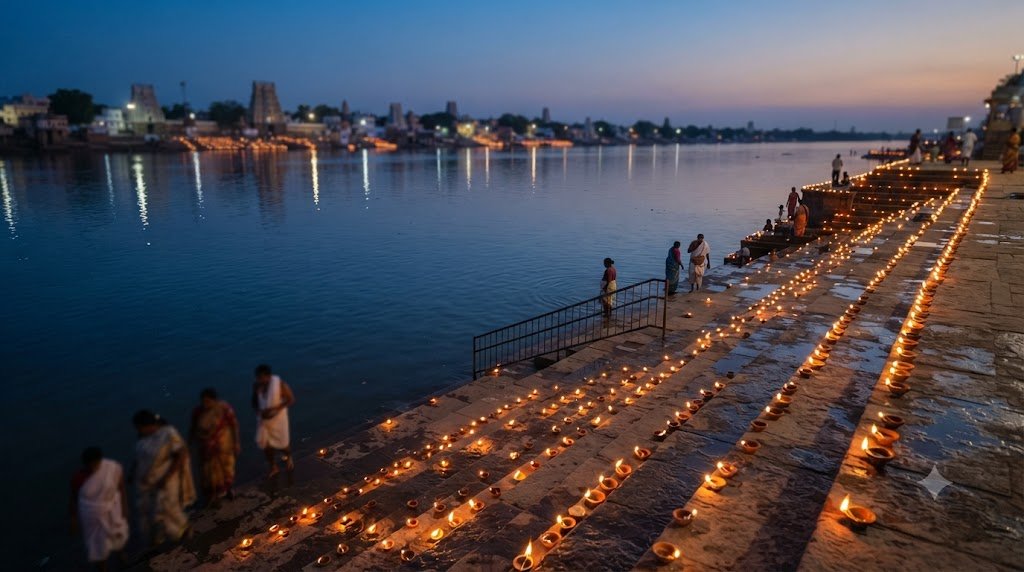
Evening lamp lighting is one of the most familiar Karthika customs. Families place a clay or metal lamp near the household shrine or Tulasi plant. Some temples also conduct collective Deepotsavam programmes.
Devotees commonly use oil or ghee with a cotton wick. Keep the flame on a stable, fire-safe surface and away from curtains, children and pets. Never leave a burning lamp unattended.
Reading Karthika Puranam
Many Telugu households read or listen to Karthika Puranam during the month. The devotional text recounts stories associated with the significance of Karthika, lamp offerings and righteous conduct.
Some families read a daily chapter after their evening prayers. Others attend temple discourses or listen to a trusted recording. The number of chapters and reading order can vary by text edition and family tradition.
Karthika Monday Fasting
Somavaram fasting is a traditional expression of devotion to Lord Shiva. Some devotees observe a complete fast, while others consume fruit, milk or a simple meal according to their customary rules.
There is no single fasting pattern suitable for everyone. People with diabetes, pregnancy-related needs or other medical conditions should consult a clinician before restricting food or water. Prayer without fasting remains an option.
Vanabhojanam: Community Meals Outdoors
Vanabhojanam is a distinctive Telugu Karthika tradition involving a community meal in a garden or natural setting. Families and devotional groups may gather near an amla tree, which carries religious significance in some customs.
The gathering often combines prayers, vegetarian food and time with relatives or neighbours. It can be organised simply, without elaborate arrangements. Choose a safe location, avoid damaging trees and take all waste home.
Food Customs and Charity
Many Karthika households prefer vegetarian meals and avoid certain foods according to family rules. Simple rice dishes, dal, vegetables, seasonal produce and traditional offerings are common, but no single menu applies to everyone.
Some families avoid onion, garlic or particular vegetables during selected fasts. Others follow different practices. These are religious and cultural customs, not universal medical or dietary requirements.
Food donation, or annadanam, is another valued tradition. If you wish to donate, choose a trusted charitable organisation or an authorised temple channel. This independent website does not collect contributions.
Why Karthika Masam 2026 Matters on the Godavari
Karthika Masam holds a special place in Telugu devotional practice because Shiva and Vishnu traditions meet during the month. Devotees commonly light lamps, visit temples, bathe before worship and give food or other charity.
On the Godavari at Rajamahendravaram, the river adds a strong pilgrimage setting to these household and temple observances.
A Godavari bath during Karthika is a matter of religious faith, not a medical or guaranteed spiritual outcome. Devotees traditionally regard sacred-river snanam, deepam and danam as acts of purification and devotion.
The practical value of a Rajahmundry visit comes from combining those observances in one manageable riverfront plan. However, devotees need not travel to the river for every daily Karthika custom.
How to Plan Godavari Snanam During Karthika Masam 2026
A practical Godavari Snanam plan begins before the riverfront becomes busy. Reach an established public ghat in daylight or around dawn. Then check access conditions and use only the open bathing area.
After bathing, change into dry clothes before continuing to temple worship or lamp offerings.
- Choose the day first. Pick a Karthika Somavaram, Pournami or a quieter weekday according to your family tradition.
- Use an established ghat. Rajahmundry has recognised riverfront ghats, including Pushkar Ghat and Kotilingala Ghat. Check local access on arrival.
- Keep the bath simple. A ritual bath does not require entering deep water. Follow barriers, police directions and ghat safety notices.
- Move away from wet steps after snanam. This reduces crowding and gives other pilgrims safer access.
- Continue worship on dry ground. Temple darshan, prayer, deepam and danam can follow without remaining at the water edge.
River access conditions can change with water levels and local works. Therefore, treat ghat notices, police instructions and district advice as the final word on safe access that day.
Which Rajahmundry Ghat Should You Choose?
There is no religious need to chase a single best ghat for every devotee. Pushkar Ghat is a central riverfront choice, while Kotilingala Ghat has a strong Shiva association that fits Karthika worship.
Gowthami Ghat is another familiar riverfront area. During an ordinary Karthika month, do not assume that special Pushkaralu facilities, traffic plans or temporary services will operate.
Those arrangements belong to the separate Pushkaram festival period. Instead, plan around normal city access and any local controls announced for your visit.
Karthika Pournami 2026 in Rajahmundry
Karthika Pournami 2026 falls on Tuesday, 24 November, in Andhra Pradesh. The Pournami tithi begins at approximately 11:42 PM on 23 November and ends around 8:23 PM on 24 November, according to the cited calendar calculations.
That makes 24 November the key date for Godavari Snanam, temple worship and evening lamp observances. Confirm exact local timing when planning a strict vrata or sankalpam.
Pournami may draw more devotees than an ordinary weekday. Therefore, allow extra time around the riverfront. Families with elderly members or young children may prefer a less congested ghat or an earlier visit.
If authorities restrict a bathing area, choose another officially open access point. Never cross a barricade.
Morning Snanam or Evening Deepa Danam?
Both practices have different roles in Karthika worship. The morning suits snanam and temple prayers, while dusk is a common time for deepam. Devotees may observe both when convenient, but one practice does not automatically require the other.
If you cannot remain at the river throughout the day, follow your family or priestly tradition. A single internet muhurtham will not fit every household observance.
Deepa Danam During Karthika Masam 2026
Deepa Danam during Karthika Masam 2026 is the devotional offering of a lamp. Devotees particularly associate it with Karthika evenings and Pournami. Practices differ between families and temples.
Many use a small clay lamp with oil or ghee and a cotton wick. However, releasing many lamps into the river is not a universal requirement. Local restrictions may limit what enters the water.
A Simple Deepa Danam Sequence
- Choose a safe, designated dry place near the river or temple.
- Place the lamp on a stable surface before lighting it.
- Offer a short prayer according to your family tradition.
- Keep children and loose clothing away from the flame.
- Dispose of flowers, foil and packaging in bins rather than the river.
If a temple organises a lamp offering, follow its queue and material rules. Do not pay unknown intermediaries who promise guaranteed rituals or private riverside access.
This website does not arrange priests or pujas. Verify any paid service directly with the relevant temple or authorised counter.
Best Days for a Godavari Visit in Karthika Masam 2026
The best day depends on the experience you want. Karthika Pournami carries the strongest full-moon focus, while the four Mondays suit devotees centring their worship on Lord Shiva.
An ordinary weekday, however, can offer a quieter river bath and easier movement for families.
| Visit type | Suggested date | Planning note |
|---|---|---|
| Pournami observance | 24 Nov | Major festival focus; allow more time |
| Shiva-focused Monday | 16, 23, 30 Nov or 7 Dec | Somavaram worship; crowds may increase |
| Quieter snanam | Ordinary weekday | Usually easier pacing |
| Month-end observance | 7–8 Dec | Masa Shivaratri and Amavasya period |
One useful strategy is to separate spiritual priority from crowd priority. If Pournami matters most to your family, arrive with extra time. If the river bath matters more than a specific date, choose a calmer morning.
What to Carry for Godavari Snanam and Evening Deepam
Carry only essential items because wet steps and crowded approaches make loose bags awkward. A change of clothes, towel, drinking water and regular medicines cover the basics.
- Dry clothes and a towel in a waterproof bag
- Drinking water, especially for older pilgrims
- Regular medicines and basic identification
- A small clay lamp, wick and oil only where permitted
- A reusable bag for taking waste away
- Minimal valuables and no unnecessary jewellery
Cold-water bathing may not suit everyone, especially before sunrise. Older adults, pregnant pilgrims and people with heart, breathing or mobility conditions should seek suitable medical advice.
A symbolic bath or prayer from a safe area is preferable to physical risk. Likewise, avoid strict fasting when it could affect your health.
River Safety Rules Pilgrims Should Not Ignore
The Godavari is a major river, so sacred intent does not remove current, depth or slip hazards. Use recognised ghat steps, hold rails or chains where provided, and obey closures.
Never enter an unbarricaded stretch because another group is bathing there. Keep children under close supervision near the water.
River conditions can change after upstream rain or water releases even when Rajahmundry itself has clear weather. Therefore, a bathing point that looked safe on an earlier visit may no longer be suitable.
What If Your Chosen Ghat Is Closed or Too Crowded?
Access to a particular ghat is never guaranteed. High water, maintenance and crowd controls can change bathing arrangements. If your first choice is closed, use another officially open established ghat.
If authorities advise against river bathing altogether, skip entering the water. You can complete prayers or a permitted lamp offering from a safe area.
Do not climb barriers, use isolated banks or pay anyone for special access. Safety must take priority over a planned ritual schedule.
Rajahmundry Planning Beyond the Ritual
Rajamahendravaram and Rajahmundry refer to the same city, so both names appear on maps and travel information. If you are planning a wider pilgrimage, read the Rajahmundry ghats guide for riverfront orientation.
You can also explore the Godavari Pushkaralu guide for wider context on sacred bathing destinations. Remember that Pushkaralu-specific facilities apply to that separate festival, not automatically to Karthika Masam.
For civic information, consult the East Godavari district administration. For religious calendar checks, use a local Telugu panchangam alongside Drik Panchang.
Common Karthika Masam 2026 Mistakes to Avoid
The first mistake is using a North Indian Karthik calendar for an Andhra Pradesh observance. Telugu households generally follow the Amanta convention, so month labels may differ across regions.
Another mistake is treating every online auspicious time as universal. Local calculations, sunrise rules and sampradaya practices can change the correct observance day.
Some devotees also assume Karthika worship must involve a Godavari visit. In fact, evening lamps, Puranam reading and household prayers form a major part of the month’s traditional observance.
Finally, do not confuse regular Karthika Snanam with Godavari Pushkaralu. Both involve sacred-river bathing, but Pushkaralu is a separate festival linked to Jupiter’s transit.
Likewise, Deepa Danam does not require plastic-lined lamps or non-biodegradable waste entering the river. A permitted lamp offering on dry ground can respect both devotion and the environment.
Before You Go
Karthika Masam 2026 gives Telugu families almost a month of festivals, worship and household customs. The major dates are 13 November for Nagula Chavithi, 20 November for Uttana Ekadasi, and 24 November for Karthika Pournami.
Check your local panchang for Ksheerabdi Dwadasi on 21 or 22 November. The final Somavaram and Masa Shivaratri fall on 7 December, before the month closes on 8 December.
For Rajahmundry visitors, a simple plan often works best: safe early snanam, dry clothes, temple prayer and a modest evening lamp offering. Faith gives the observance its meaning, while careful planning protects devotees and the river.
Frequently Asked Questions
When does Karthika Masam 2026 start in Andhra Pradesh?
Karthika Masam begins on Tuesday, 10 November 2026, in the Telugu Amanta calendar. It follows the Ashwayuja Amavasya period and continues until 8 December.
When does Karthika Masam 2026 end?
The Telugu Karthika month ends on Tuesday, 8 December 2026, with Karthika Amavasya. Regional lunar calendar conventions may label the month differently.
When is Nagula Chavithi in 2026?
Nagula Chavithi falls on Friday, 13 November 2026, in the consulted Andhra Pradesh calendars. Devotees traditionally worship Naga Devatas through family and temple customs.
When are Uttana Ekadasi and Ksheerabdi Dwadasi?
Smarta Uttana Ekadasi falls on 20 November. Ksheerabdi Dwadasi is commonly listed for 21 November, although some local observances extend to 22 November. Follow your local panchangam.
When is Karthika Pournami 2026 in Rajahmundry?
Karthika Pournami falls on Tuesday, 24 November 2026. The date is important for Godavari Snanam, temple worship and evening deepam. Check local arrangements before visiting a crowded ghat.
What are the four Karthika Somavaram dates in 2026?
The four Karthika Mondays are 16, 23 and 30 November, and 7 December 2026. They carry special significance for Shiva worship in many Telugu traditions.
When is Karthika Masa Shivaratri in 2026?
Karthika Masa Shivaratri falls on Monday, 7 December 2026. It coincides with the fourth Karthika Somavaram and precedes the end of the Telugu lunar month.
Is fasting compulsory throughout Karthika Masam?
No single fasting rule applies to every devotee. Some families fast on Mondays or Ekadasi, while others follow vegetarian food customs and regular prayers. Adapt religious observances to your health needs.
What is Vanabhojanam during Karthika Masam?
Vanabhojanam is a traditional outdoor community meal observed by many Telugu families during Karthika. It often includes prayers, vegetarian food and gatherings in gardens or natural surroundings.
Can I observe Karthika Masam at home?
Yes. Families commonly observe the month through evening lamps, Karthika Puranam reading, prayers and charity. A river journey or temple visit is not necessary for every household custom.
Can I take Godavari Snanam on Karthika Pournami?
Yes, provided authorities permit access and river conditions are safe. Use a recognised public ghat and obey local restrictions. Avoid entering deep or fast-flowing water.
Is Deepa Danam compulsory during Karthika Masam?
Deepa Danam is a valued religious custom, but practices differ among families and temples. A simple household lamp can be a meaningful devotional observance.
Is Karthika Masam the same as Godavari Pushkaralu?
No. Karthika Masam is an annual lunar month, while Godavari Pushkaralu is a separate periodic river festival linked to Jupiter’s transit. Their bathing traditions may overlap, but their dates and arrangements differ.
Which ghat is best for Karthika Snanam in Rajahmundry?
Pushkar Ghat and Kotilingala Ghat are familiar choices, while Gowthami Ghat is another option. The best choice depends on current access, crowding and safe bathing arrangements.
What should elderly pilgrims do for a Karthika river bath?
Older pilgrims should avoid slippery steps, cold-water exposure and crowded bathing points when these create health risks. A symbolic observance from a safe area is preferable when river entry is unsuitable.

Godavari Pushkaralu Editorial is the team that researches, writes and maintains this site.
godavaripushkaralu.org.in is an independent pilgrim guide. It is not affiliated with, endorsed by, or the official website of any government body or temple administration, and it takes no bookings or payments.
How we work: festival dates come from the Andhra Pradesh government notification and the East Godavari district portal rather than from other guides. Jupiter’s transits, which set the twelve-year Pushkaram cycle, are checked against published panchangam transit tables. Claims about government arrangements — ghats, medical camps, transport, helpdesks — are attributed to their source or clearly marked as plans, because for a festival still months away most of them are plans. Volatile details such as fees and muhurtham clock times link out to the official portal instead of being fixed in our pages.
Every page here is re-checked on a fixed schedule and corrected when the facts move. If you find an error, tell us through the contact page and we will fix it.